PureFinishRendering · York
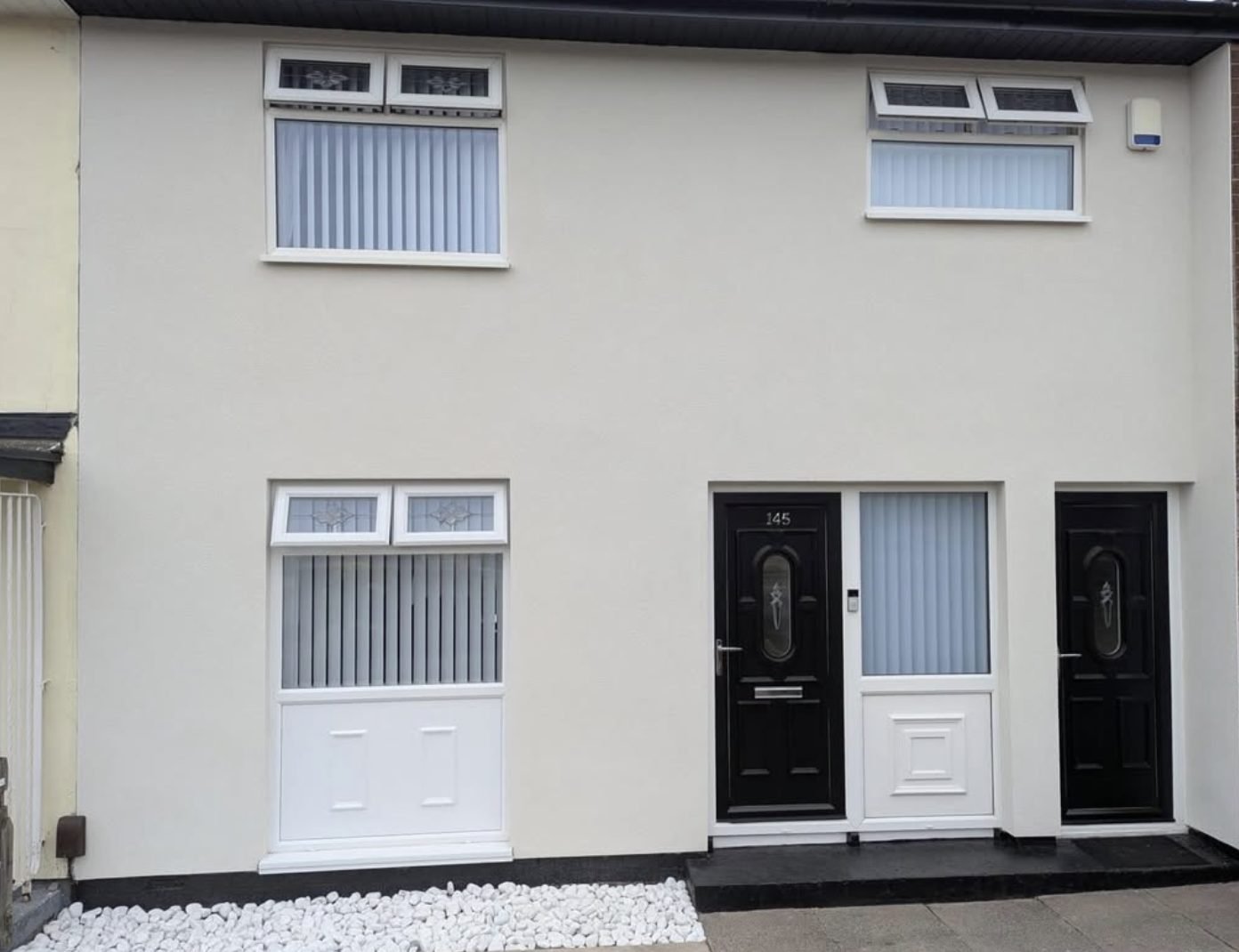
Bungalow front elevation rendered smooth beside untouched pebbledash next door

Rendering over pebbledash

More people ring about this than anything else, and nothing else we do alters a property so completely. The good news is that most dash never has to come off. It has to be flattened, reinforced and finished properly instead.

  • Cover pebbledash
  • Pebbledash removal
  • Smooth finish
  • Levelling basecoat
  • Gable ends
  • Full elevations

Find out which job yours is

Covered or removed. You will know which before you agree to anything.

Straight to us, not to a lead panel. One call back, then a figure in writing.

Two very different jobs, one appearance

Dash is everywhere in this city, especially on the post-war estates, and we have yet to meet anyone determined to keep theirs.

What surprises most people is that taking it all off is usually unnecessary. Dash that is still firmly attached stops being an obstacle and becomes the base for a levelling coat.

Dash that has let go is a different matter. Anything applied on top of it inherits the failure underneath and comes away when that does, which means paying twice for one elevation.

Working out which of those two you own happens before a price is written, not partway through the week.
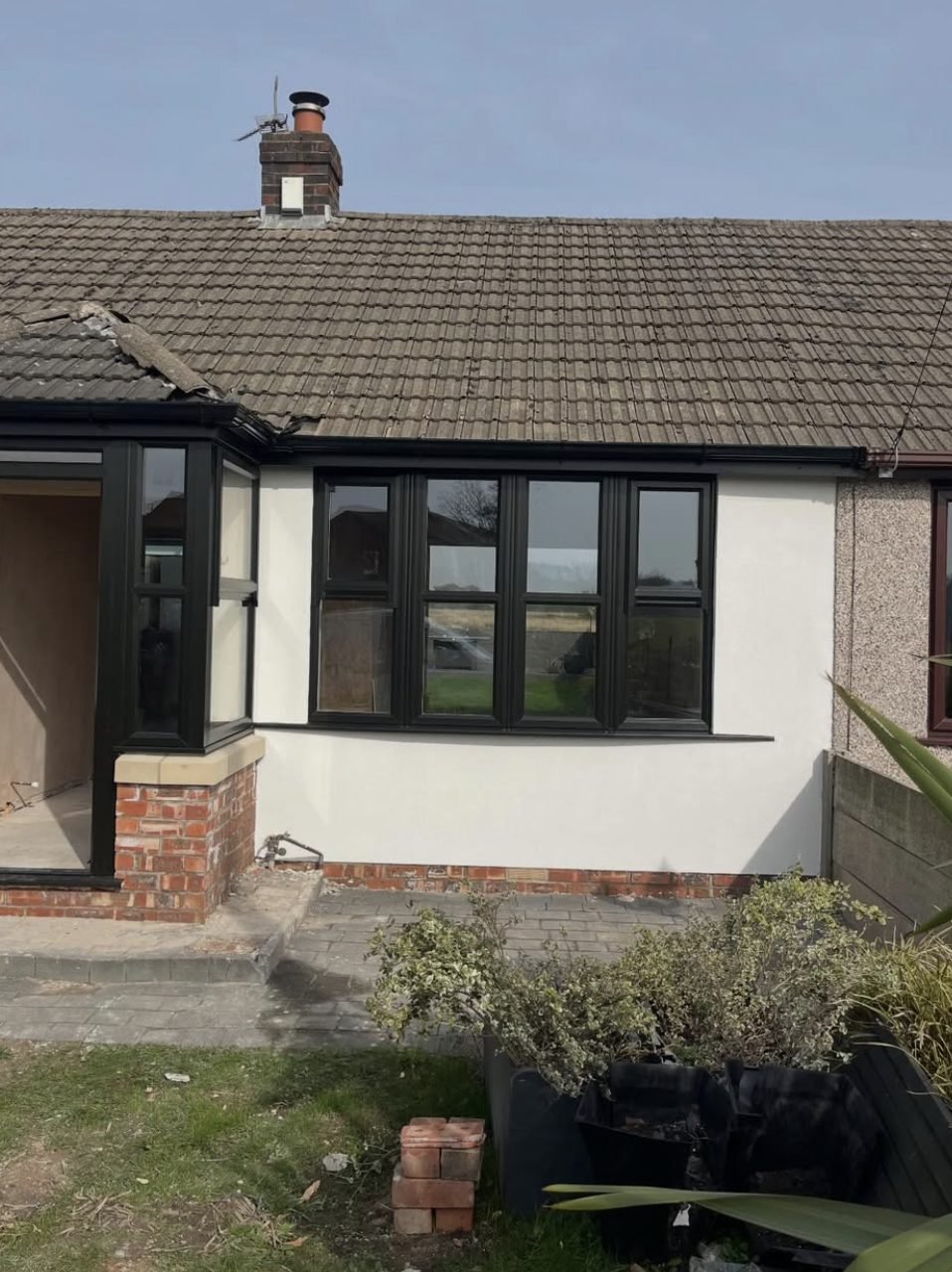
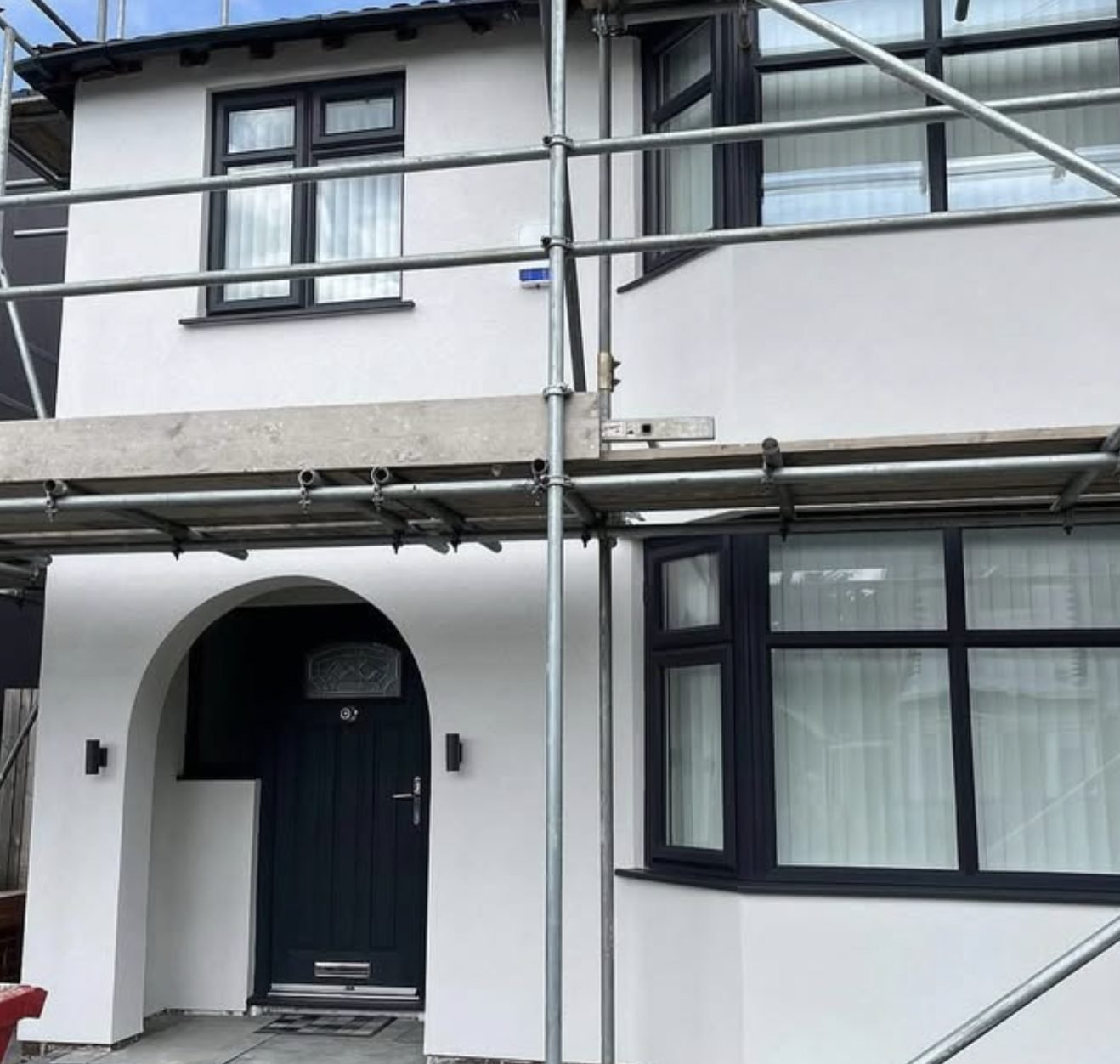
Semi-detached house part way through rendering with scaffolding still up

The six stages

  1. Knock the wall outSomebody works the full surface by hand, marking up anything that rings hollow, and the price is built on what that reveals.
  2. Remove what has goneDebonded sections are cut back to firm material. If the whole elevation answers hollow, all of it leaves in a skip.
  3. Clean and prepareThe exposed surface is washed down and, where the substrate calls for it, treated so the next coat has something to bite into.
  4. Build the levelling coatApplied at full specified thickness with reinforcement bedded inside it, flattening the texture and taking future movement across the wall.
  5. Set the profilesBell cast along the foot, stop beads at every edge and movement beads wherever the panel size demands them, all lined in true.
  6. Lay the finishThe final coat goes on across the whole elevation without a break, so there is no join and no change of tone anywhere in it.
Two terraced houses brought under a single smooth render finish

Have a word with the neighbour first

On a semi or a terrace this is worth five minutes of your time. Done as a pair, the two properties read as one building. Done alone, yours can look like half a job for a good while.

There is a financial argument too: the access and the setting up are paid for once instead of twice, so both households end up better off.

If they are interested, we price each property on its own. Neither of you ends up committed to the other's decision.

What customers have said

Three of the reviews left for the PureFinish team, printed as written.

I cannot recommend Jake and the team highly enough. Excellent communication, clean, respectful and got the job done very quickly. The render itself is spot on and looks fantastic. Thank you so much. Would defo recommend to a friend!
Stephanie E.Customer Review · Rendering
Great service from start to finish, Jake was quick to get out and take a look at the job and the finished product is fantastic. Would certainly use again.
Ethan N.Customer Review · Rendering
Great communication before and during the job. Happy with the finish. Price as quoted. Thanks
Charlotte W.Customer Review · Rendering

Pebbledash questions

Cover it or take it off?

Whichever the existing coat will allow. Covering is faster, quieter and costs less, because stripping brings labour, skips and a great deal of noise before a single new thing has been applied.

But that is not really the deciding factor. What decides it is whether the dash is still attached to the masonry, and no budget conversation changes the answer.

How do you know before you start?

We knock our way across the elevation and listen. Attached dash answers flat and solid. Anything that has come away from the wall rings hollow.

The hollow zones get marked up and measured. A modest proportion means cutting those out and covering the remainder. Drumming from one end of the wall to the other means the lot comes off.

Will you still see the stones underneath?

Not where the wall has been levelled properly. The texture is taken out with a levelling coat, reinforcement goes through it across the full elevation, and the finish then has a flat plane to sit on.

When you can still make out the old dash through a new coat, somebody went straight to finish and skipped the levelling stage. It is avoidable, not inevitable.

How bad is the mess if it has to come off?

Considerable, and we would rather you heard that now. Removal is the loudest and dustiest thing we do and it fills a skip faster than people expect.

Everything we can reasonably sheet gets sheeted, the site is swept at the end of each day, and we do not linger over that stage.

What condition will the brick be in underneath?

Serviceable, usually. Handsome, not always. Dash frequently went on in the first place because the brickwork behind it was never the best, and taking it off can bring soft or spalled faces to light.

So if the plan is to strip back and live with bare brick, go in with open eyes. We will tell you what is visible at the edges before you commit to it.

How many days is it?

Three to five working days of actual rendering on an average semi, with access up before and after that.

Add one to three days at the front if the old coat has to come off first, depending on how large the elevation is and how firmly it is hanging on.

Will it help when we sell?

We render walls, we do not value houses, so take this as opinion rather than advice.

What we can say is that nothing else we do alters the look of a property so sharply, and a noticeable share of these jobs get booked by people a few weeks away from a first viewing.

Can we just do the gable?

Yes, and it is a frequent request. Do expect the finished wall to look conspicuously newer than the dashed ones beside it until a few seasons have evened things out.

If the rest is likely to follow eventually, say so now. We keep a record of the exact system and shade so the later work matches rather than approximates.

Send us an image of the wall

A shot of the full elevation plus something taken close in is normally enough for us to point you in the right direction before arranging a visit.

We reply once. No chasing sequence afterwards.

Call 01904 911112 Ask for a price